
This is a guest post by Roddy Schrock, a homeopath, arts executive, and former noise musician whose career has never moved in a straight line. Included artworks are by Christine Ödlund.
If you had told me ten years ago that I would become a homeopath, I would’ve assumed you were confusing me with someone else—someone who owns a lot of crystals.
I’m a seasoned NYC arts executive and a believer in reality-based decision-making. For a decade, as Executive Director at the art-and-technology nonprofit Eyebeam, I was steeped in translating the ineffable magic of creativity into hard metrics: we either hit fundraising goals or we didn’t, for example. In that role, things were going well: By the time I stepped away last summer, I had scaled direct support to artists by over 500%, and built the organization’s first-ever reserve fund so that my successor could have a little breathing room the next time the global economy shuddered and shook.
But behind closed doors, individually absorbing the relentless instability of the arts sector—while also being exposed to the toxic machinations of the tech world—my own health was a mess. I had “unexplained” sharp pains that moved from place to place in my gut, slowly increasing in frequency and intensity over the months and years, all alongside relentless insomnia and a nervous system that felt like it had gone through a wood chipper. I didn’t have the vocabulary then, but later I learned that this nervous exhaustion is related to the profound biological and dopaminergic depletion that follows sustained, high-stakes intellectual output. The absurd thing is, when you’re in a leadership position, you just normalize this. You talk about it with your peers in fatigued tones, like, “Well, yes, my health is a mess and my personal relationships are in tatters, but that’s just the job.” And when my doctor ran tests, everything came back negative, so I thought, “maybe it’s all in my head?”
Eventually, my sheer exhaustion simply outpaced my skepticism. I realized the normalization of stress-induced unwellness wasn’t just a personal failing; it’s a systemic threat to the economic viability and long-term resilience of the entire cultural sector, to say the very least. So, ready to take a leap of faith, I found myself in a Zoom session with a classical homeopath. The juxtaposition between our lives was almost comic. I was calling in from a nondescript hotel room in cold downtown Detroit, drained from the previous day of meetings and the obligatory dinner and drinks that followed. My homeopath, meanwhile, was beaming in from what looked like an idyllic, sun-drenched farm in rural Italy. And for two solid hours, he just… listened to me. We cataloged my entire life story. Every childhood injury, every bizarre career frustration, every physical and mental weirdness I had ever experienced. I learned very quickly that in homeopathy, there is absolutely no such thing as TMI.
A few days later, my homeopathic remedy arrived in the mail. It was made, out of all the things in the world, from lemon peel. My homeopath had selected it from thousands of possible options, rigorously calculated to match my highly specific symptom picture. So, I took it. And then I slept. I slept deeply for the first time in I don’t know how long. The next day, I felt noticeably different.
⚕
Now, before we dive in further, let me be incredibly clear: I believe in science, and I love cold, hard facts. But here I am, a few years after my first experience of homeopathy, now a practitioner of a modality that forces me to talk about “energy” with a straight face.
If you aren’t familiar with homeopathy, I would describe it as a framework for healing that nudges the body’s energetic system into improved coherence. We do this using natural substances that have been meticulously diluted, usually to a point where only the “energy” of the original substance remains. (I’m sorry we don’t have a better word than energy. It feels woefully inadequate, and comes with all sorts of baggage. But it is simply the closest conversational language we have to describe the vitality that moves through us, recognized globally through different practices and worldviews.)
During the 19th century, homeopathy was incredibly popular in the United States, and while being less popular today, it still retains high patient-satisfaction scores. In a lot of ways, it shares DNA with things like acupuncture and herbalism—modalities that also work to improve the flow of energy in the body. I mention all of this because my nonlinear path into this world has left me stranded at the intersection of science, institutional data, and the often-unexplainable reality of lived experience—all with the inexplicable “energy” stuff sandwiched in between—which is an awkward space to inhabit.
After nearly a year of working with clients in my online clinic, writing clinical case studies still makes me uncomfortable. Lingering on the intimate details of someone’s suffering is not something I enjoy, but I do want to give you a sense of what I have seen homeopathy accomplish, because the mystery and the outcomes absolutely inspire me, daily. So as a couple examples, consider the case of Chloe, a creative professional whose cyclical, debilitating back pain and panic attacks evaporated after we addressed her profound sense of internal hurriedness. Then there’s Evan, a man in his fifties who had spent his entire life swallowing his anger to keep the peace, until his body blew a fuse and he started having focal seizures. Since beginning treatment, he hasn’t had one episode.
I don’t share success stories to brag. On the contrary, it’s to remind myself, and anyone reading this, of the mysterious energetic forces which are always at work in the world, and within our bodies. All of these clients received remedies chosen through a comprehensive evaluation, then prepared through a series of dilutions so extreme that, by conventional logic, absolutely nothing of the original substance should remain: just nanoparticles and, as the late Nobel Prize-winning virologist Luc Montagnier once put it, “water structures which mimic the original molecules.”[1] This is how homeopathic remedies are made: through a unique process of dilutions and succussions which “activate” the energy of the material. And while I know this sounds woo-woo, there is a lot of exciting research being done to explore how it actually works. For example, a brilliant researcher named Dr. Iris Bell has developed a fascinating theoretical model suggesting that homeopathic remedies function as “adaptive network nanomedicines”—essentially, that they deliver a tiny, low-dose nanoparticle signal that acts as a hormetic stressor, gently jolting the body into healing itself. [2]
However homeopathic treatments work, observationally—across all of these radically different people—healing happens. And, there’s another thing too: they all reported feeling a wave of positivity bubbling up from within their bodies.
You’d think these outcomes would make me feel deeply confident and triumphant as a homeopathic practitioner, but actually, they give me a feeling of panic. I’ve become acutely aware that while I continue to observe fantastical outcomes, seeing clients get better triggers an anxiety-inducing conundrum: How on earth do you trust a mystery—and how do you explain it? With homeopathy, there’s always an awkward tension hovering in the room. While you are practicing one of the most widely used medical systems in the world [3][4], you will be frequently dismissed by medical orthodoxy as a total charlatan. And as of yet, there’s no way to definitively prove otherwise.
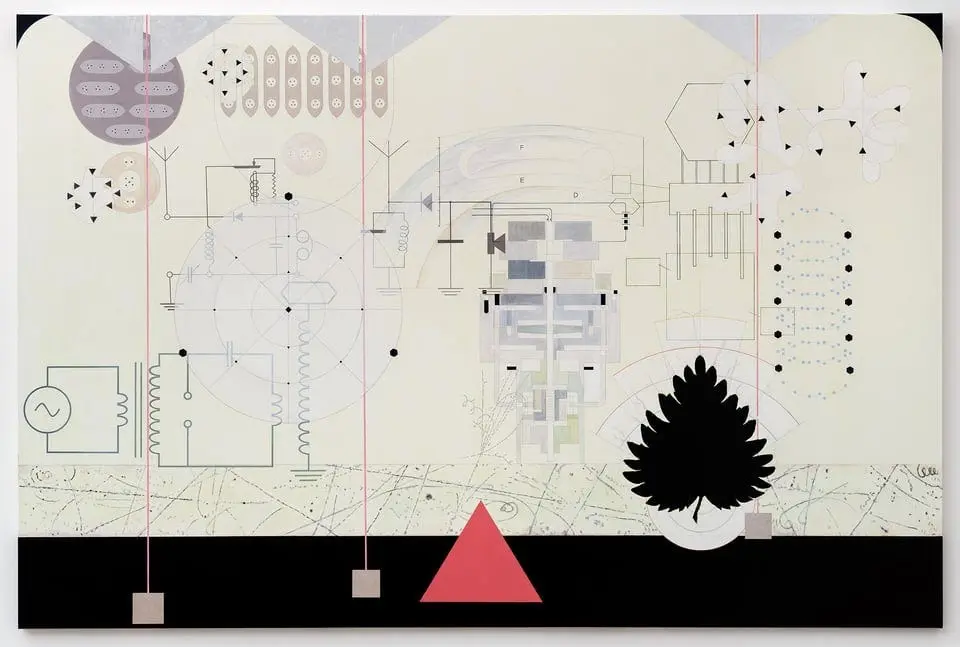
In considering this conundrum, my immediate instinct was to sweep everything unexplainable under the proverbial rug. I wanted to build an image that looked incredibly scientific, and to provide a bulletproof, mechanistic explanation of how it all works, maybe by pulling in the advanced research of Dr. Bell and Luc Montagnier, along with others. But then I remembered a piece of advice about dealing with complicated ideas: Don’t hide your concerns. Let your story be the story. And for me, that means also looking to other forms of evidence and knowledge, some of which are still quite mysterious indeed.
While reading up on epistemology recently, I stumbled upon a framework by sociologist Harry Collins that made my seemingly nonlinear career path, and homeopathy itself, make more sense. [5]
Some philosophers suggest there are three types of knowledge:
• Propositional knowledge is when you know something is true due to scientific facts, data, lab results, etc. This is the currency of modern institutions, a form of linear sense-making.
• Then there’s procedural knowledge, when you know how to do something because you’ve learned it. Riding a bike, maintaining a homeopathic practice, or writing a grant for a big donation would be examples of this.
• Lastly, there’s experiential knowledge, which is when you know by feeling and experience—like when you suffer a broken heart, have a spiritual revelation, or feel your body healing.
When looking at my resume, it might seem like I get distracted easily: a sociology grad who toured Japan in a noise band, then managed philanthropic portfolios while leading an art-and-tech organization. But this funny vocational trajectory is actually the record of a massive push-and-pull between the three forms of knowledge, which began on a rural southern farm back when I was a gay kid craving a different life, which clashed with the person society propositionally told me I was supposed to be.
As a teenager with a dial-up modem and a vivid imagination, I started reading re-issued Allen Ginsberg books, which eventually pushed me to join a Zen dojo at age nineteen. That practice allowed the literal nothingness of sitting and breathing to open up space for my individual identity to take root. It was pure, unadulterated experiential knowledge.
But, I didn’t want to just sit. So at 21, drawn to Japanese culture and propelled by a desire for radical change, I moved to Tokyo, where I formed a “noise unit” called Tog and spent my nights experimenting with brutal, shrieking electronic soundscapes. That was experiential knowledge, too, as you can’t write a standardized test for a wall of eardrum-busting feedback. You just have to undergo it.
Eventually I moved back from Tokyo and landed in New York City, where a 15-year sprint through the non-profit world culminated in my ED work with Eyebeam. There, my job was essentially to quantify the unquantifiable using both propositional and procedural knowledge.
When I took a sabbatical from the field last year to get my homeopathic certification, I was finally able to observe the dynamic of multiple forms of knowledge in dynamic interplay. This helped me realize that there’s actually no tension between the magical (experiential) and the measurable (propositional + procedural) after all. On the contrary, they are just different ways of ordering our thoughts in symbiosis with the various forms of knowing. And when you know things in all types of ways—rather than through one single type of knowledge—there is a cumulative power that brings along a sense of deep wisdom and understanding.
This brings me to the absolute riskiest topic I could possibly introduce while trying to convince you I’m not a quack: Alchemy. When most of us hear the word “alchemist,” we likely picture a medieval eccentric in a dim lair, frantically trying to turn lead into gold. But that is a historical caricature. The alchemists working within the 2,000-year-old Hermetic tradition were actually early scientists, physicians, and philosophers. More importantly, they were arguably the last group of Western thinkers who explicitly tried to hold all three types of knowledge—propositional, procedural, and experiential—together in the same practice. While rigorously documenting and memorizing the physical properties of substances, they also learned and mastered incredibly complex laboratory preparations. And, they believed that each practitioner must cultivate a direct, lived encounter with the mysteries of the natural world. They didn’t see a conflict in all these ways of knowing; instead, they believed each one informed, and strengthened, the others. [6]
So, why did experiential knowledge, in particular, get pushed to the margins? Last year I took a short course on the Hermetic Sciences that traced how alchemical traditions were systematically marginalized. Looking at my notes from the course, there’s a scribble in the margins, which I evidently made with much excitement: “There’s an economic aspect of alchemy: it challenges the economic system of medicine. This is dangerous!!! It’s not that it’s not possible, it’s that it is unacceptable!”
Looking back, the exclamation marks are a record of me realizing that the shift away from alchemical thinking, or away from trusting all three forms of knowledge in symbiosis, wasn’t just about following the evolving science. Instead, it was about a profound incompatibility between individualized healing and the standardizing demands of capitalism in emerging medical systems. Take Paracelsus, for example. He was a famously rebellious 16th-century Swiss physician and alchemist, and essentially the father of modern toxicology. When he publicly challenged a highly lucrative, entirely useless syphilis treatment monopolized by the massive Fugger banking dynasty, he was effectively blacklisted from publishing his research. [7] But what truly horrified the establishment wasn’t just his medical critique. It was his “medley of spiritual, magical, and empirical conviction”: the mixing of knowledge types that couldn’t be examined through standardized testing.
The standardization of medicine, by definition, makes it impossible to hold all three types of knowledge—as there is no standard for lived experience. And yet, industrialized institutions are built to credential standardized, propositional data that can be engaged through procedures. Therefore, they are unable to measure experiential revelation—and often, what an institution cannot measure, it declares impossible. But the evidence increasingly suggests it is possible.
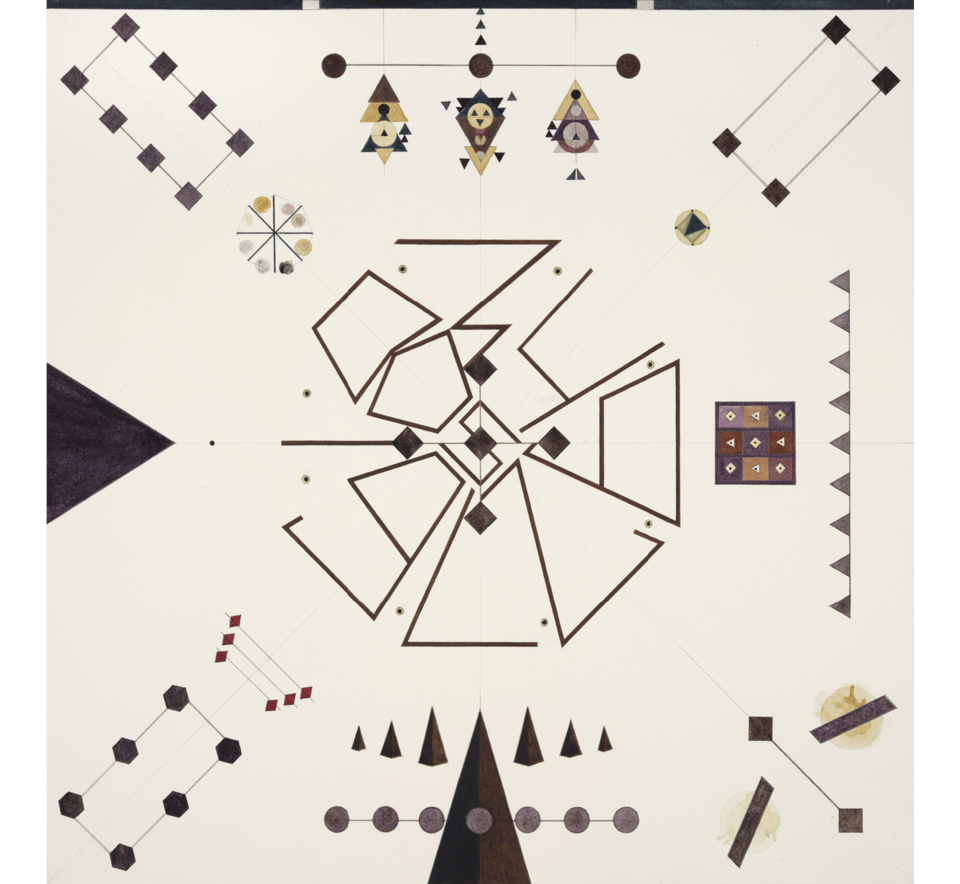
On occasion we see glimpses of a bridge between ways of knowing. French virologist Luc Montagnier co-discovered HIV, won a Nobel Prize, and then began conducting experiments showing that highly diluted water retains structures that mimic original molecules. [8] When asked about homeopathy, he plainly stated, “What I can say now is that the high dilutions are right.” [9]
A recent N-of-1 study published in Brain Behavior and Immunity Integrative didn’t just ask a single patient how she felt after taking homeopathic remedies; instead, researchers put her blood plasma under a microscope, which allowed them to observe nanoscale shifts in biological pathways that mirrored her lived experience of improvement. [10] Of course, this is just observations of one patient. All the same, it hints at an exciting possibility: that as our scientific tools become more precise, we might eventually be able to measure what experiential knowledge has been patiently pointing toward for centuries.
While my clients don’t need to know about nanometer particles to get better, the fact that our scientific tools are becoming sensitive enough to detect these microscopic shifts matters deeply. It isn’t that science is “catching up” to explain the magic away and turn it back into a spreadsheet. Rather, it’s proving that the mystery has an undeniable, physical footprint. When Montagnier’s “water structures” and Dr. Bell’s “adaptive nanomedicines” are viewed side-by-side, they don’t erase the mystery of healing—they simply show that what’s unknown can still be propositional knowledge.
⚕
When I first started practicing homeopathy, I wanted to explain it like a mechanic detailing the inside of an engine. I might have presented my cases as neat, linear success stories, hiding the anxiety I felt while we waited to see results. But healing requires the exact opposite: patience, and for us to admit that the mystery is real. As a healer, my job is not to explain away that which can’t be explained, but rather to build a container big enough to hold it all.
Remember, scientists didn’t understand the mechanism of aspirin until the 70s. With a few years of practice under my belt, I understand that healing happens with homeopathic remedies reliably enough to build a practice, gently enough to feel like a subtle force of nature, and mysteriously enough to keep me perpetually humble. Maybe someday, we will stop assuming that propositional data is the only arbiter of truth, and realize that, perhaps, it is building the tools to measure the Hermetic alchemists’ oldest claim: “The subtle is nobler than the dense.” [11] Or, put even more poetically by Percy Shelley, that all knowledge is “dear, and yet dearer for its mystery.” [12]
References
• [1] Enserink, M. (2010). French Nobelist escapes ‘intellectual terror’ to pursue radical ideas in China. Science, 330(6012), 1732.
• [2] Bell, I. R., & Koithan, M. (2012). A model for homeopathic remedy effects: low dose nanoparticles, allostatic cross-adaptation, and time-dependent sensitization in a complex adaptive system. BMC Complementary and Alternative Medicine, 12, 191. https://doi.org/10.1186/1472-6882-12-191
• [3] Boiron. (2024). L’usage de l’homéopathie dans le monde. Harris Interactive.
• [4] Brasil. (2018). PNPIC Política Nacional de Práticas Integrativas e Complementares no SUS. Ministério da Saúde.
• [5] Collins, H. (2010). Tacit and explicit knowledge. University of Chicago Press.
• [6] Hedesan, G. D., & Saif, L. (2024, June 25–July 4). Two Hermetic Sciences: Magic and Alchemy in the Middle Ages and the Renaissance [Online short course]. The Warburg Institute, University of London.
• [7] Moran, B. T. (2005). Distilling knowledge: Alchemy, chemistry, and the scientific revolution. Harvard University Press.
• [8] European Committee for Homeopathy. (2022). Luc Montagnier (1932-2022). https://homeopathyeurope.org
• [9] Oberai, P., et al. (2022). A tribute to the man who found ‘High Dilutions Right.’ Indian Journal of Research in Homoeopathy, 16(1), 74-75.
• [10] Adler, U. C., et al. (2025). A personalized, integrative approach in treating major depressive disorder: N-of-1 study with plasma proteome and physicochemical analysis of homeopathic preparations. Brain Behavior and Immunity Integrative, 11, 100133.
• [11] Pseudo-Apollonius, trans. Saif; De alchemia, 1541, trans. Hedesan
• [12] Shelley, Percy Bysshe. “Hymn to Intellectual Beauty.” Poetry Foundation, www.poetryfoundation.org/poems/45123/hymn-to-intellectual-beauty. Accessed 19 Apr. 2026.
If this was useful, get it first on my newsletter, with notes that never make it to the site.