Beyond New Age Fluff: The Real Story of Homeopathic Medicine
When I first heard mention of homeopathy on a podcast some years ago, my first thought was: what in the world is this odd practice?! Apparently, I thought to myself, it is a form of physical treatment that for some reason requires understanding a person’s mental state but at the same time is most definitely not psychotherapy. It attempts to find an element in nature that matches the unique needs of an individual but it is not of shamanic origin. It aims to align energy in the body but it does not come from Traditional Chinese Medicine. And, to cap things off, apparently it was the most popular and lucrative form of medicine in the United States, by far, in the 19th century , christened “new medicine for the new world”. But for some reason, I had never heard of it or when I had, I just wrote it off as new age-y fluff typical of my joyous 90’s youth.
Imagine my surprise in learning that it is in fact an elegant and self-contained healing modality with centuries of research and demonstrated efficacy to back it up, currently used by 100’s of millions of people across the planet, included in national health systems from Brazil to Switzerland. At the time of its founding, it was widely seen as a cutting-edge science displacing barbaric medical practices of the past. It was, and still is, intended to be a gentle, effective treatment assisting individuals in realizing their full potential, allowing for the authentic self-expression of one’s true self through alignment of body and mind, united in good health. It is rooted in the innate potential of human creativity and imagination. It is no coincidence that homeopathy was founded in the Enlightenment era which foregrounded use of one’s own understanding rather than relying on external authority. That was the time of philosopher Immannuel Kant espousing the courage to “Sapere Aude!” or Dare to Know! Homeopathy was understood as revolutionary, reliant on an empiricism which pushed aside cobwebs of superstition.
So what does homeopathic treatment look like now? It really hasn’t changed much. As homeopaths, we work to understand the totality of your symptoms, inclusive of body and mind, and then match a homeopathically prepared element from nature, called a remedy, that may activate the body’s natural healing process. It’s important to understand that homeopathic treatment is a process. It is not a “pill for your ill” but instead is an energetic intervention which may prompt the body towards a state of healing. The intake conversation, typically around 90 minutes, is when homeopaths try to gain a full understanding of, simply put, what troubles you. This allows for a wide open, confidential, and supportive space for you to share troubles of body and mind, from childhood to the present. Sometimes in this recounting, a client connects symptoms that would not have emerged otherwise because they may now be considering mind and body as a whole for the first time, rather than as isolated entities. After this, the homeopath works to match an element from nature which will help clients’ bodies move to a place of self repair. We then schedule check-ins to track progress over time, adjusting as need be to ensure that we are working towards a renewal of health.
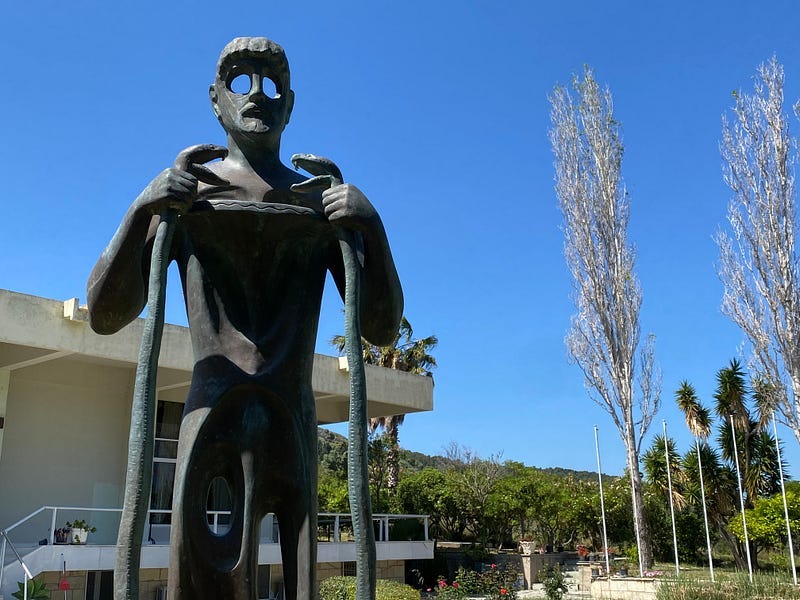
Crucially, in homeopathy there is a reliance on the maxim credited to Hippocrates (c. 460–370 BCE) that diseases can be cured by substances that produce similar symptoms in healthy people. This is the same idea behind much contemporary, mainstream medicine: from vaccines to chemotherapy, digitalis for heart troubles to immunotherapy for allergies. In homeopathy, remedies are made from an element in nature most similar to the illness but are then diluted to the point that they no longer contain a trace of the original, instead holding only the energy of that element. This energy is then introduced into the body to trigger the healing process.
I do not claim to understand the mechanics of this action , I only know what I have observed in myself which is that healing occurred during health challenges when I worked with a good homeopath. There are many very smart people who are researching the “mechanism of action” in homeopathy but we must acknowledge that it doesn’t correspond to present, accepted science. For me, that is not a problem, there are a lot of things that remain mysterious in science. After all, homeopathy is not intended to work in isolation, many use it in conjunction with mainstream medical treatments. As in all things, I believe, one should take advantage of the most appropriate tools available, even in combination.
To me, homeopathy represents a timeless approach to healing as well as preventative care. Recognizing the challenges that current health systems have in providing meaningful support for complex forms of illness that exist in our time, I am open to all means that may assist in returning to health, embracing complexity of the interwoven connectivity of mind and body. Homeopathy is uniquely positioned to address this complexity and is deserving of serious inquiry.