Colin Self on Building Worlds, Slaying Doom, and the Health of Creative Practice
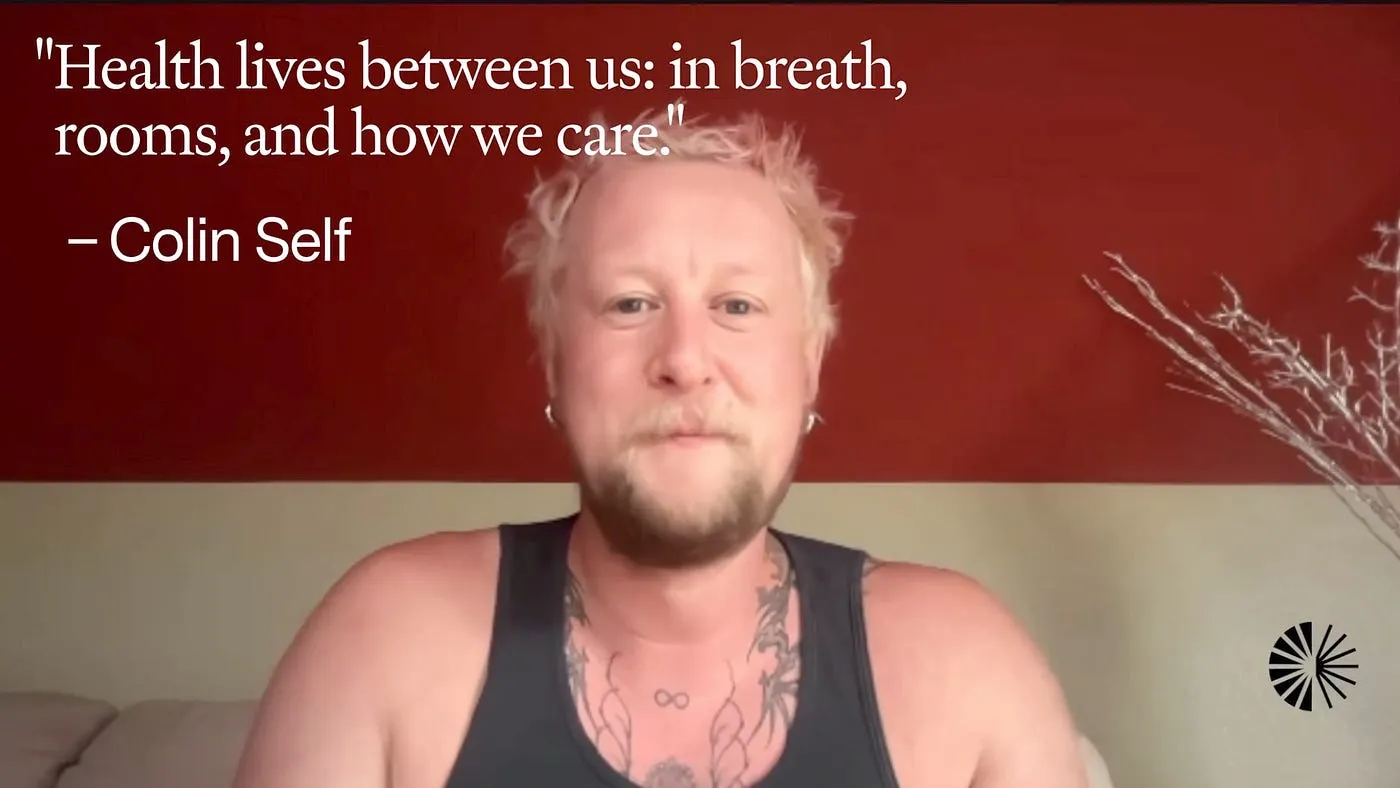
The following is an edited excerpt from my podcast conversation with composer and performer Colin Self. We talk about what health can mean for a driven, creative person and how the body sometimes pays the price. Colin has been re-orienting their practice toward attunement, striving to align relationships between self, others, and the environment.
We also explore how, after large commissions at major institutions, Colin found that smaller rooms often hold bigger truths, and why embodied work can be a counterweight to an over-accelerating culture.
Roddy Schrock: Colin, thanks for being here. What brings you to Portland?
Colin Self: The beginning of a general contracting journey. I’m doing an apprenticeship with my dad. In the long-term, I have visions of having an all-queer and trans general contracting company and becoming an educator of these building practices.
Roddy Schrock: I love that. My partner and I moved to rural Massachusetts, and it’s been so rewarding to connect with people outside my prior social situation.
Colin Self: People often have a self-imposed bias about being afraid of rural communities, but upon actually going, they realize their own internalized classism or other biases. There’s a growing sea change.
Roddy Schrock: That brings me to my next question. What field or fields would you place your work in?
Colin Self: When you first sent this invitation about health, I thought, “What does my work have to do with health?” Then I realized: all the things I do are about taking care of and fostering communities. My practice is about bringing people together to transform their perception of what’s possible.
Roddy Schrock: Do you have a working definition of health for yourself?
Colin Self: I think about health as something that exists in, through, and between relationships—to ourselves, others, and the world. It feels like a frequency you can attune to.
Roddy Schrock: That idea of attunement really resonates with my work in homeopathy. In my practice, I help people find that same kind of alignment, supporting the body’s natural ability to find balance. It’s exactly this kind of relational, non-mechanistic approach to health that drew me to this work.
Colin Self: Yes, that makes so much sense. There’s a real parallel there.
Roddy Schrock: I want to talk about your relationship to technology. Where are you with that now?
Colin Self: Leading into the pandemic, many of us experienced computational burnout. I began thinking about technologies outside of “screen land.”
I’ve been drawn to asking: what do we need to root ourselves in amidst a fascist technocracy? How do we set stakes in the physical material world when the ruling class is interested in the decimation of physical reality?
We see the fundamental ways tech makes us all sick—socially, politically, financially. The conversations around AI have massive blind spots. It feels like manufactured opposition.
Roddy Schrock: It’s refreshing to hear someone from a creative tech background say this.
Colin Self: A big part of why I’m moving into building is that the people on the other side of this tech debate have never done manual labor. There is something you learn from the physical experience of creating a roof deck or growing food. It’s a vital world of information from which we’ve been disconnected.
Roddy Schrock: What are some of the things you feel optimistic about now?
Colin Self: People come to me to feel like they’re not doomed. Me and my friend Monica use the term “doom slayer.”
I’m excited about the performance school we started in Maine. And being in the world of construction and building gives me so much hope. Having a physical material practice as a social thing shows you what can happen when a group works together.
I had a big commission from a German state opera and a bad experience. Right after, I made a play with puppets I built in a small L.A. theater. It was a wake-up call. The logic that “bigger is better” is not the case. The most meaningful works often have an audience of 20 or 50 people.
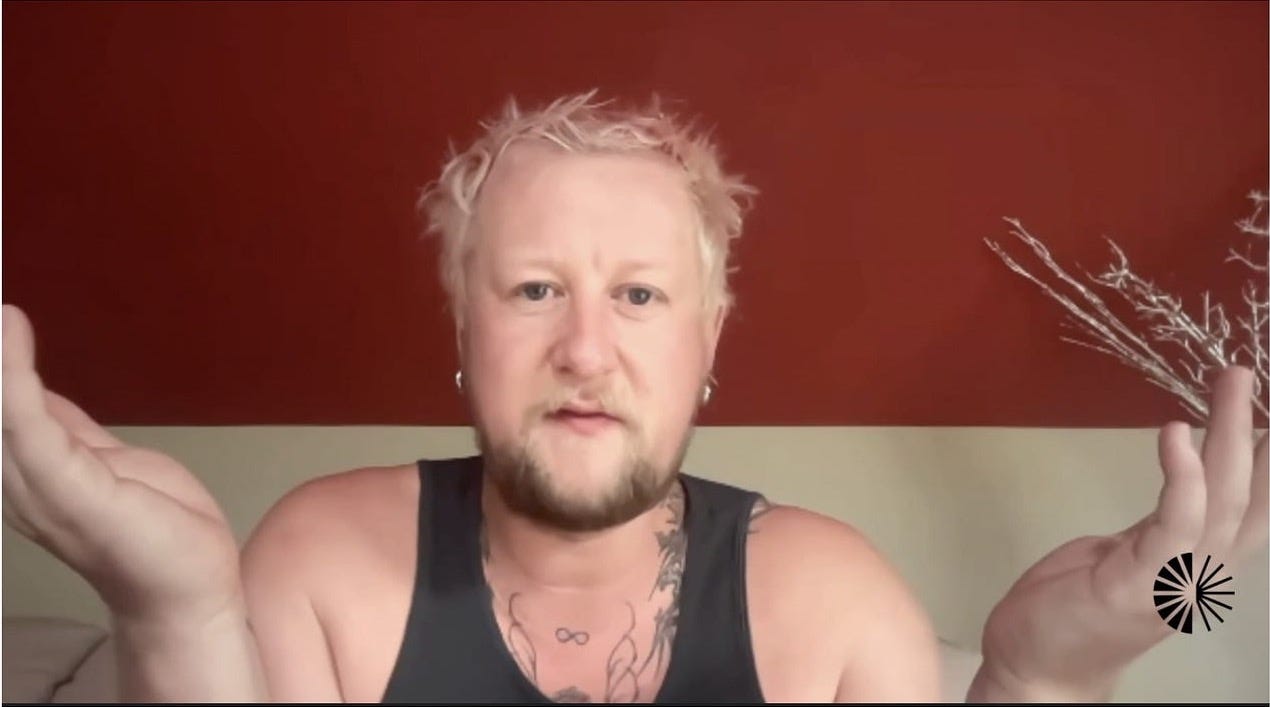
As we move away from a generational fantasy about technology, there is so much value in local communities. Just because it’s not the dominant narrative doesn’t mean it isn’t happening.
Roddy Schrock: It’s a pleasure to catch up. Where can people find you?
Colin Self: I’m Colin Self on Instagram and my website is colin-self.com. I also have a Substack at colinself.substack.com.
This is an edited excerpt from my full conversation with Colin Self. To hear the complete discussion, including more on homeopathy, rural communities, and Colin’s upcoming projects, listen to the full episode and subscribe to the podcast at the link below.
👉 Listen and Subscribe to the Podcast Here: https://pod.link/1575277583
This interview is part of my ongoing series on creative health: practical conversations at the intersection of art, attention, and care. My aim is simple: to help ambitious, creative people find health so they can think, make, and share without burning out.